Hyper-personalisation: what it is and how to implement it
Campaigns assembled on the fly from data about a single customer: real-time data, predictive models, a CDP and AI stack, 6 implementation steps and risks.
Introduction: why the era of “1:1 at scale” has arrived
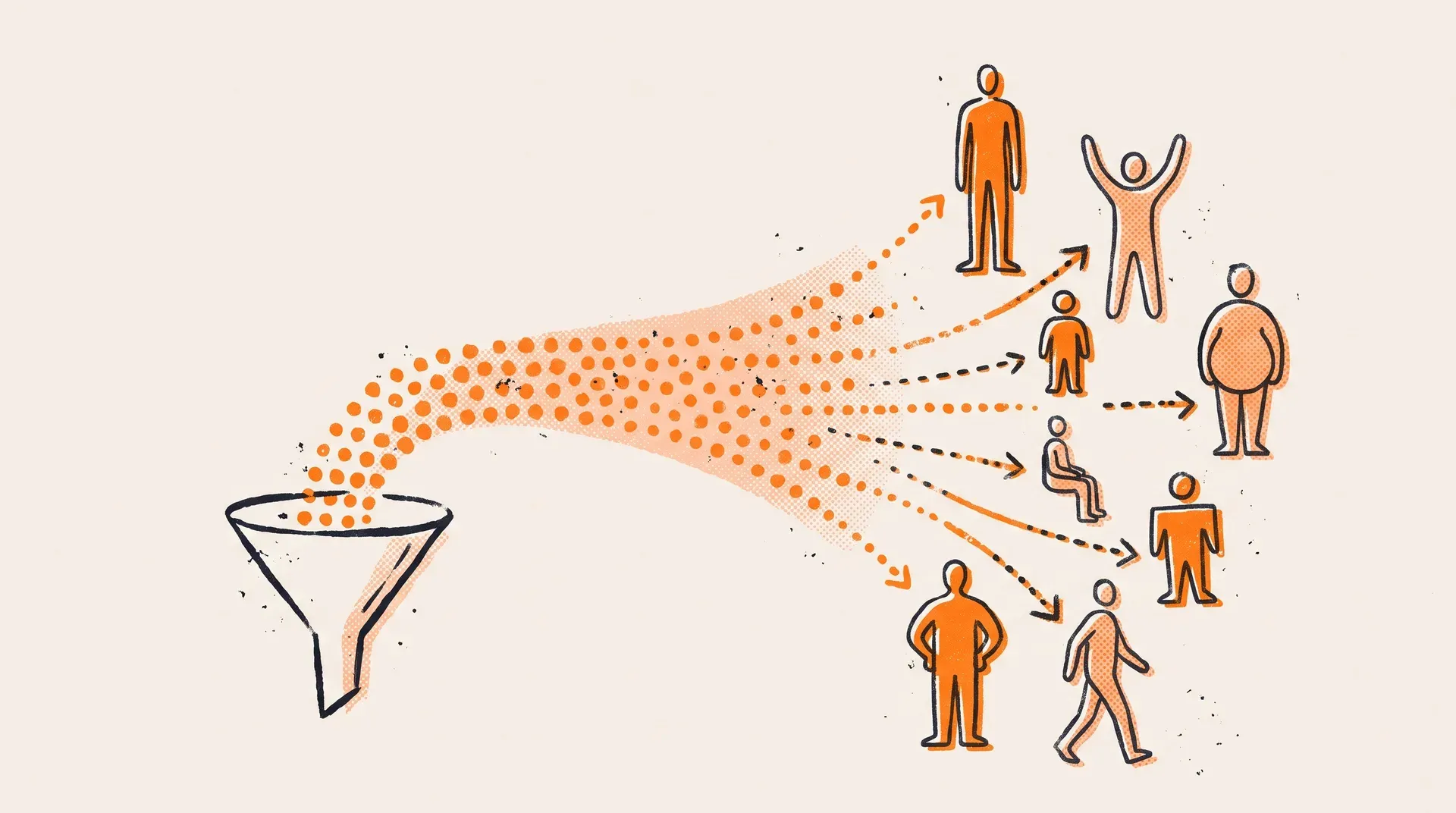
Personalisation used to stop at a first name in an email subject line. Today, people see offers based on what they viewed a quarter of an hour ago - and treat that as the norm, not as something special.
Artificial intelligence and machine learning are behind this shift: they make it possible to assemble a message at the moment the user looks at it, instead of preparing it a week in advance for an entire segment.
What is driving this shift?
- Rising consumer expectations - customers today expect brands to know their preferences and deliver the right content at the right time.
- Advances in AI technology - AI-based tools such as Microsoft Copilot and Synerise AI Growth Cloud make it possible to analyse data and deliver personalised experiences at a scale that was not possible before.
- Real-time data availability - by collecting data from different channels, brands can now respond to customer behaviour almost instantly, adjusting their messages and offers.
Why does it matter?
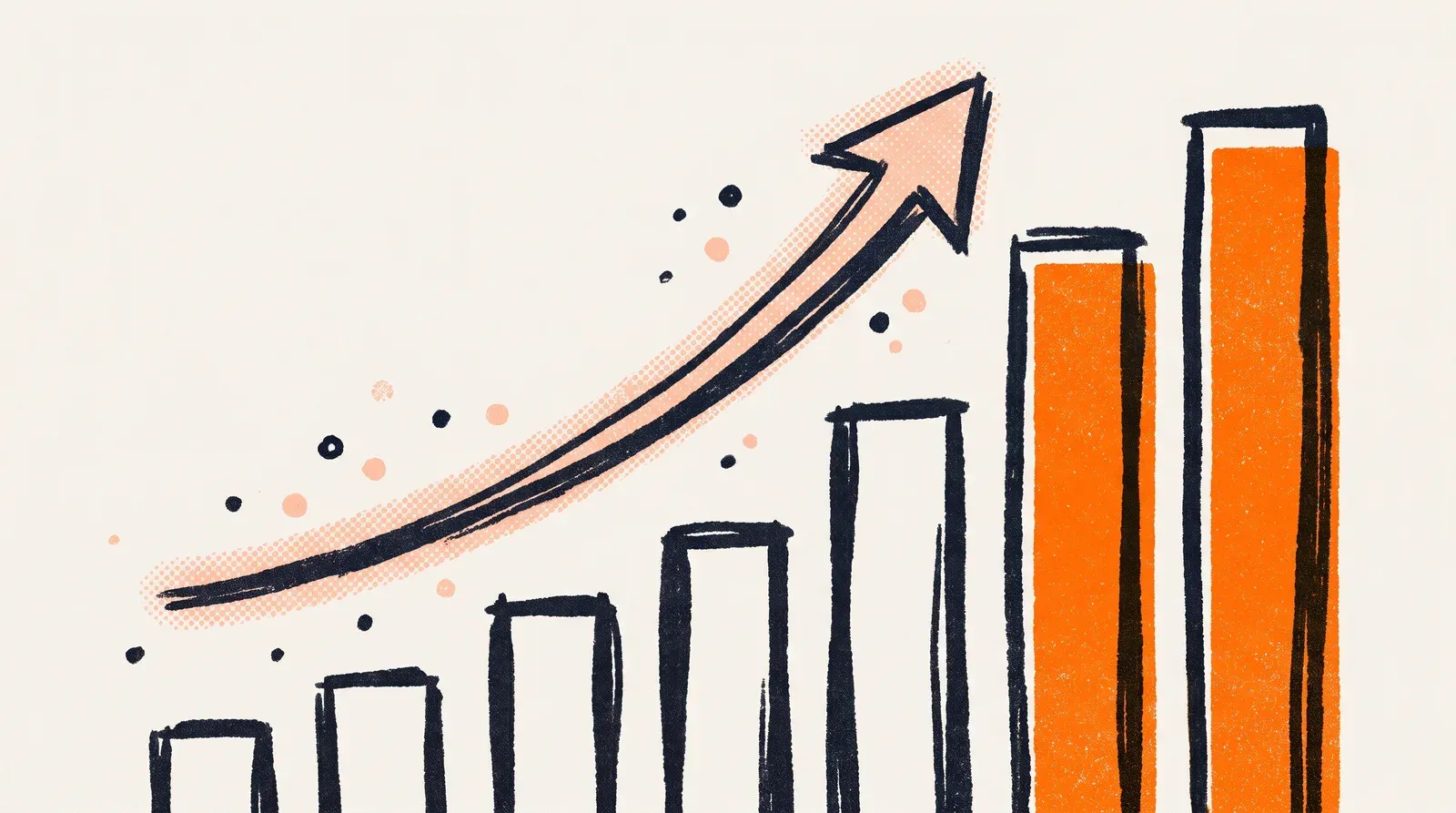
Personalisation shortens the distance between intent and offer. People do not have to dig through a catalogue to find what they came for - and the fewer steps between them and a decision, the fewer chances they have to back out. It works both ways: the same data that makes a message more relevant also lets you stop sending it to people who have no interest in the topic.
In the following sections, we go through the whole chain: where to get data, which model to build on it, how to turn it into creative, and how to tell whether the numbers add up. There is a fair amount of theory here, but without it, implementation ends with buying a tool nobody knows how to connect.
Read onReal-time data: where to get it and how to combine it effectively
A good marketing campaign is no longer just a clever ad and well-chosen channels. Above all, it is the data you collect, analyse and put to use straight away.
In the era of hyper-personalisation 2.0, real-time data is becoming the fuel of every effective advertising campaign. But where do you get it, and how do you combine it to improve efficiency and ROI?
Real-time data: what does it actually mean?
Before we go further, a definition: real-time data is information collected and processed almost instantly, right after it is generated. It lets you respond quickly to what a user does, adapting your marketing message to their current needs and behaviour.
With this data, your advertising campaign stops being a shot in the dark and becomes a precise operation that increases the chance of converting each individual user.
Where can you get real-time data?
There are many sources of real-time data. These are the most important:
- Websites and e-commerce stores - every interaction a user has with your website (clicks, scrolling, time spent on individual products) is valuable information. Analytics tools such as Google Analytics 4 and Hotjar, or your own custom CMS, let you analyse this data immediately.
- Social media - Facebook, Instagram and YouTube provide detailed data on user behaviour. Your own Facebook Ads campaigns and YouTube advertising let you collect data on users’ interests, activities and reactions, which you can use immediately in dynamic campaigns.
- Customer Data Platforms (CDPs) - platforms such as Synerise and Segment bring data from different sources into one place, so you can analyse it on an ongoing basis and use it in predictive advertising campaigns.
- Mobile apps - with well-designed mobile apps, you can collect real-time information about users’ location, activity and preferences, which lets you respond quickly and personalise your communication.
- PPC advertising campaigns (Google Ads, Facebook Ads) - running PPC campaigns lets you observe user behaviour, so you can quickly match your online ads to people’s preferences and current needs.
How do you combine real-time data effectively?
Collecting data is one thing - integrating it effectively is what counts. How do you do that?
- Integrating data in a Customer Data Platform - the best solution is to bring all your data sources together in a single CDP. This gives you a complete, 360-degree view of the customer, from their first click to the final purchase.
- Using AI tools - advanced artificial intelligence algorithms analyse data in real time and predict user behaviour. This lets you adjust offers as you go, creating effective product recommendations and personalised advertising campaigns.
- Marketing automation - integrated automation tools (such as ActiveCampaign or HubSpot) let you use real-time data immediately, so users receive personalised offers from you exactly when they are most receptive to them.
A practical example:
Imagine a customer browsing the products on your website right now, while you analyse their behaviour in real time - which products interest them, how much time they spend on the site, whether they have added anything to their cart.
Using this data, your automated advertising campaign can instantly offer them a personalised discount code that makes a purchase more likely.
Predictive models: from propensity scoring to live recommendations
We have already established that data is the fuel of modern marketing. Following that thread, predictive models are its engine…
Data does not make decisions on its own. A predictive model turns it into a number you can base a budget on: who is worth reaching today, who will buy anyway, and who is getting ready to leave.
Below are three things in turn: what these models are, how the most widely used one works, and how to implement them in your own business without a data science team.
What are predictive models?
Predictive models are algorithms based on artificial intelligence (AI) and machine learning (ML) that use collected data to predict future customer behaviour. They are built on users’ historical interactions, purchasing patterns, responses to ads and the paths they take through your website.
In AI marketing, these models are used for, among other things:
- predicting a customer’s likelihood to buy (propensity scoring),
- automated product recommendations,
- churn prediction (forecasting which customers will leave),
- tailoring advertising campaigns to specific target groups.
Propensity scoring: what it is and how it works
One of the most widely used predictive models in advertising campaigns is propensity scoring. It estimates the probability that a given user will take a specific action - for example, making a purchase, clicking a Facebook ad or signing up for a newsletter.
Propensity scoring lets you segment customers precisely and target personalised advertising campaigns only at users who are genuinely ready to buy or take another valuable step.
- More effective advertising campaigns,
- Lower advertising costs (budget focused only on the most valuable audiences),
- Higher conversions and campaign ROI.
Dynamic live recommendations: the most advanced form of personalisation
The next step in predictive marketing is live recommendations. This technology uses AI models that analyse user behaviour in real time and generate instant offer recommendations.
If a user in an online store is browsing smartphones, AI can instantly show them a personalised ad for phone accessories or a dedicated discount code.
With live recommendations, your online ads stop being generic and become highly precise, closely matched to each customer’s needs.
How do you implement predictive models in your business?
Here are a few steps worth including when you introduce predictive models into your advertising campaigns:
- Collect historical data - customer behaviour data is the foundation. Make sure you collect detailed data on how customers interact with your website, online store or mobile app.
- Choose the right tools and technology - pick a Customer Data Platform (CDP) or marketing automation system that supports predictive models (such as Synerise, Salesforce Marketing Cloud or HubSpot).
- Set the prediction goal - decide whether your aim is predicting conversions, recommending products or reducing customer churn. This determines the type of model you will use.
- Integrate models with advertising campaigns - once you have built a predictive model, connect it to your advertising tools (such as Google Ads or Facebook Ads) so that it adjusts ads automatically based on its predictions.
- Analyse and optimise - monitor how well your models perform by analysing conversion rates and ROI. Do not be afraid to refine them based on current results.
Before you implement a model: check how much historical data you have. Below a few thousand events per class, the model has nothing to learn from and will return results indistinguishable from random guessing. In that case, it is better to start with solid manual segmentation.
Hyper-personalisation stack architecture (CDP, AI, API)
Implementing hyper-personalisation in advertising campaigns is not just a creative approach to communication. It is also - perhaps above all - well-planned technology infrastructure.
If you want to run a marketing campaign that genuinely works “1:1 at scale”, you need to know what your marketing stack should look like. Specifically: how to connect a Customer Data Platform (CDP), AI systems and external APIs so that data flows smoothly and works towards your brand’s results.
What is a marketing technology stack?
A stack is the set of tools that together make up your environment for managing data, automation and personalisation. For hyper-personalisation, it usually consists of:
- data collection and integration tools,
- analytics and segmentation platforms,
- AI-based personalisation engines,
- marketing automation systems,
- APIs for communicating with external advertising channels.
All these elements must work together smoothly. Without that, even the best data is useless. In smaller businesses, a custom-built CRM system takes on the role of the glue - it is enough while you have a handful of data sources rather than a dozen or more.
1. Customer Data Platform (CDP)
This is the foundation of hyper-personalisation. A CDP collects user data from many sources: websites, e-commerce stores, mobile apps, Facebook ads and Google Ads campaigns. It then processes the data in real time and builds what is known as a 360° customer profile.
Examples of CDPs:
- Synerise (a Polish platform with strong AI capabilities),
- Segment (Twilio),
- Salesforce Customer 360,
- Bloomreach Engagement.
Why does it matter? A CDP shows you who your customer really is - not just a click on a banner, but a person with a specific intent, history and context.
2. AI engines: the layer that puts data to use
A CDP collects the data, but AI engines are what use it. They make it possible, for example, to:
- predict what a user will buy in the next 48 hours,
- adapt the content of a page or ad in real time,
- choose the best channel and moment to contact a customer.
Modern AI does not just analyse data; it learns from user behaviour, which makes advertising campaigns more and more effective - on social media and in Google Ads alike.
3. API: the link between systems
There is no effective hyper-personalisation without an open API. It is what lets your data “flow” between systems - for example, from a CDP to Facebook Ads, from a recommendation engine to your website, or from a CRM to your email marketing tool.
Examples of API use in an advertising campaign:
- Sending product recommendations to dynamic banners on Facebook.
- Updating Google Ads ad content based on a user’s behavioural data.
- Triggering an email or SMS based on an event (such as an abandoned cart, in real time).
What does it look like in practice?
- A user visits the website - the CDP records their activity.
- AI analyses the data and assigns them to the “ready to buy” segment.
- The API sends this signal to Facebook Ads, where a matching ad with a discount code is launched.
- The CDP tracks whether the ad worked and teaches the AI how to optimise for similar users.
Next, I will show you how to build dynamic creative on this infrastructure - in other words, how artificial intelligence can prepare hundreds of ad variants on the fly, closely matched to your target audience.
Dynamic creative: how AI generates hundreds of ad variants on the fly
You have 5 seconds to catch someone’s attention. Maybe less. That is why, in marketing, hyper-personalisation is no longer just about “what” you say, but “how”, “where” and “to whom” you say it - ideally in real time.
This is where dynamic creative comes in: a set of tools and technologies that let you create dozens or even hundreds of ad versions tailored to a specific user.
By combining data from a Customer Data Platform, AI engines and automated design, you can now launch an advertising campaign in which everyone sees a different message - tailored precisely to them.
What is a dynamic ad?
A dynamic ad is a format that automatically matches the ad content to data about the user: their location, age, interests, on-site activity or purchase history. It works not only in Google Ads and Facebook Ads campaigns, but also in email marketing, display ads and even on your website.
Example: Has a user been browsing winter jackets in your online store? The next day, they see exactly the same jacket in a Facebook ad, only with a discount. Another customer, who has never been interested in winter clothing, sees promoted sports accessories. Same campaign, different creative. Dynamic.
How does AI create ad variants?
Traditionally, ad creative is the work of a team of graphic designers, copywriters and strategists. AI changes that completely:
- It generates hundreds of ad copy variants based on behavioural data and interaction history.
- It tests which variants work best and swaps content dynamically - without you having to step in.
- It adapts images, CTAs, headlines and colours to the user’s context (such as age, location or stage of the sales funnel).
- It learns in real time which style, wording and visual form converts best in a given group.
Examples of dynamic creative tools
- Meta Advantage+ (formerly Facebook Dynamic Creative) - automatically mixes headlines, descriptions, graphics and CTAs.
- Google Ads Responsive Display Ads - generates multiple ad layouts matched to user behaviour and placement.
- Persado, Copy AI, AdCreative AI - fully fledged AI copywriting that produces unique, results-oriented ad messages.
- Synerise Dynamic Banners - a Polish platform built around AI that lets you create personalised banners for each user.
What can you personalise dynamically?
Creative element
Example personalisation
“Just for you - 15% off jackets in Zakopane” (a Polish mountain resort)
“Take another look” vs “Buy now - with a discount”
Matched to aesthetic preferences or the time of day
Dynamic emphasis on the benefits that appeal most to a specific user
Why is it worth it?
- Better advertising campaign results - CTR and conversions rise because the message lands exactly where it should.
- Lower customer acquisition cost (CAC) - better targeting = less wasted budget.
- Less manual work for your team - AI handles most of the optimisation for you.
- Higher engagement - people see ads that “speak their language”.
So before you go any further, make sure you know how to check what really works - because without hard data, even the best personalisation is just guesswork.
Measuring results: CLV, incremental lift and marketing ROI
Hyper-personalisation is impressive. Dynamic creative, AI, predictions - it sounds like the future of marketing. But as with any strategy, in the end only one thing counts: does it pay off?
That is exactly why measuring the results of an advertising campaign built on real-time data and 1:1 personalisation has to be precise, regular and tied to business goals.
What to measure? Not just clicks
In traditional advertising campaigns, we often focus on CTR (click-through rate), CPC (cost per click) and possibly conversions. These still matter, but hyper-personalisation needs a much broader view. These are the key metrics:
1. CLV - Customer Lifetime Value
What it is: Customer Lifetime Value is the value of a customer over the entire course of their relationship with your brand.
Why it matters: AI-based campaigns often focus not on a single purchase but on long-term loyalty. CLV shows whether your hyper-personalisation genuinely delivers long-term profit.
average order value * purchase frequency * average customer lifespan
2. Incremental lift - the campaign’s real impact
What it is: Incremental lift is the increase in sales or engagement generated directly by a personalised campaign, compared with a control group.
Why it matters: It shows whether your campaign actually changed customer behaviour - whether the result is a coincidence or a genuine effect of your marketing.
To measure incremental lift, run A/B tests or split tests with a control group - one group sees standard ads, the other sees the hyper-personalised version.
3. ROI of a marketing campaign
What it is: ROI, or return on investment, is the ratio of the revenue generated to the costs incurred.
Why it matters: ROI shows whether the campaign was profitable - which, after all, is the point of every marketing strategy.
(campaign revenue - campaign cost) ÷ campaign cost
Other metrics worth watching:
- Time to conversion - how quickly a personalised campaign turns into customer action,
- Open rate and CTR in email campaigns - important with dynamic content,
- Engagement score - a user’s overall engagement with the campaign (time on site, number of interactions, scrolling through content and so on),
- CPC/CPL by segment - does your data help you lower your cost per click or cost per lead?
How often should you analyse the data?
In marketing based on AI and real-time data, regularity counts. The best marketing teams optimise campaigns continuously - not only after they finish, but while they are running.
That is what lets you change creative dynamically, test new segments and react faster than your competitors.
Risks and ethics: data bias, message overload and AI pitfalls
Hyper-personalisation and data-driven marketing offer huge potential, but it is worth remembering that every technology has a flip side…
The more precise our advertising campaigns become, the more responsibility rests on us - marketers, strategists and business owners. In this section, we look at the main risks and ethical dilemmas you may face when implementing 1:1 marketing at scale.
1. Personalisation overload (overpersonalisation)
The more you know about a customer, the greater the temptation to use it in your messaging. But be careful - advertising that is too intense or too “intimate” can have the opposite effect to the one you want.
Example: A user visits a website once, then for the next 7 days sees exactly the same product in ads in every app. That is not personalisation - it is stalking.
How do you prevent it?
- Set contact frequency caps
- Use remarketing messages in moderation
- Test how audiences respond to different levels of personalisation
2. Data bias (algorithmic bias)
Artificial intelligence and predictive models are only as good as the data they were trained on. If your data contains distortions or prejudices, or is too narrow, AI can make the wrong decisions - favouring some groups, ignoring others or repeating unconscious patterns.
Example: An AI model targets only people in large cities because campaign data from previous years did not include smaller towns.
Solution:
- Monitor how your predictive models perform
- Bring in diverse data sources
- Test and analyse results for inconsistencies
3. No user consent or unclear communication
In the age of GDPR, the DMA and growing consumer awareness, personal data protection and informed consent are essential. Even if technology lets you “predict” what a user wants, that does not mean you can act without transparency.
The most common mistakes:
- unclear consent forms (such as pre-ticked checkboxes),
- no explanation of how the data will be used,
- an outdated privacy policy.
How do you fix it?
- Use clear messages when collecting data
- Update your privacy policy regularly
- Let users manage their preferences easily
4. The “too much automation” trap
AI can automate many processes… but not everything. Giving automated systems too much room can lead to a loss of control over your message or ill-considered decisions that damage your brand’s image.
Rule: Automate what you can. Control what you must.
Data-driven marketing is not just technology - it is also responsibility
If you care about building a long-term relationship with your audience, you need to think not only about results, but also about trust. Hyper-personalisation can bring people closer, but it can also push them away - it all depends on whether you treat data as a tool for support or as a weapon.
In the next (and final) section, we will take you through a roadmap for implementing a complete hyper-personalisation strategy step by step - together with a checklist that shows you straight away where to start.
Hyper-personalisation implementation roadmap: 6 steps + a CMO checklist
You now know what hyper-personalisation is, how it works, which tools it needs and how to measure it. You also know what dynamic campaigns should look like, and you have seen the potential risks.
Time to put it all in order and take action. Below is a roadmap for implementing 1:1 hyper-personalisation at scale - from the technology foundations to optimisation.
Step 1. Map your data sources
Start with an audit - where do you currently collect user data? Your website, social media, online store, advertising campaigns, newsletters?
The aim of this step is to get full control over what you have and what you are still missing.
- check whether your data is GDPR-compliant
- organise data by type: behavioural, transactional, declared
- ensure access to real-time data (for example, from a CDP)
Step 2. Integrate data in one platform (CDP)
There is no effective hyper-personalisation without centralised data. A Customer Data Platform lets you gather all the information in one place, build 360° customer profiles and segment audiences dynamically.
- choose a CDP that fits your scale and team
- connect it to your advertising system (Facebook Ads, Google Ads)
- make sure the data is updated in real time
Step 3. Define goals and KPIs
Without specific goals, hyper-personalisation turns into an impressive-looking experiment. Choose the metrics that directly affect your financial results.
- CLV - do customers come back more often and buy more?
- Incremental lift - does the campaign really make a difference?
- ROI - do you get back more than you spend?
Step 4. Build dynamic messages
Data and technology are only half the job. The other half is content - personalised, relevant and engaging.
- prepare a set of messages: headlines, descriptions, CTAs
- use dynamic creative tools (Meta Advantage+, AdCreative.ai)
- decide which elements will vary (image, price, offer, copy)
Step 5. Launch campaigns and test
Implementation does not mean the work is done - it is only the beginning. Campaigns need testing, optimising and iterating.
- run A/B tests with different versions
- watch user behaviour and responses
- adjust algorithms and creative as you go
Step 6. Analyse, learn, scale
Every hyper-personalised campaign is a goldmine of data. Use it not just to improve one campaign, but to build a long-term personalisation strategy across all your marketing.
- create reports with the metrics that really matter
- identify your most valuable audience segments
- scale to new channels: email, SMS, web push, retargeting
Checklist for the CMO / decision-maker
Seven questions that tell you whether you are ready for data-driven 1:1 marketing. Every “no” points to a specific step in the roadmap above where you need to start.
- Do I have access to real-time data from different sources?
- Do our advertising campaigns use dynamic personalisation elements?
- Does the team know and monitor the key KPIs for hyper-personalisation?
- Are users clearly informed about how their data is used?
- Does our marketing process include automated audience segmentation?
- Do we regularly test and optimise messages during campaigns?
- Do we measure the campaign’s real impact on business results, not just clicks?
Summary: what to remember from this article
Hyper-personalisation is not a feature you switch on in a tool. It is a chain: data, model, creative, measurement. If one link fails, the rest runs idle.
Key takeaways:
- Without centralised data, there is no 1:1 personalisation. A CDP combines sources into a single customer profile, and with only a few sources, a custom-built CRM system can handle that role.
- A predictive model is only as good as the data it learned from. A narrow sample produces results that favour some groups and overlook others - that is not a tool error, but an input data error.
- Dynamic creative only makes sense when you have something to swap in. Without meaningful segments, only the headline changes and the message stays the same.
- Clicks do not tell you whether it pays off. CLV, incremental lift against a control group and ROI do - everything else is a supporting metric.
- The line between looking after someone and following them is thin, and the recipient draws it, not you. Frequency caps and clear consent are part of the implementation, not an add-on.
What next?
- Start with an audit of your data sources - before you choose a tool, check what you actually collect and whether you have consent for it.
- Choose one use case and see it through to the end, measured against a control group. An abandoned cart is enough to test the whole chain.
- Scale to more channels only after your first measured result. Doing it the other way round leaves you with a stack nobody can account for.
Hyper-personalisation is not a fad, but it is not a shortcut either. Companies that start with the tool instead of the data buy an expensive engine and pour in fuel they do not have.
FAQ: common questions about hyper-personalisation
Five questions that come up when the topic moves from theory to implementation: data, models, metrics and the limits of good taste. Short answers here, details in the sections above.
What is hyper-personalisation in marketing?
It means delivering content and offers tailored to an individual recipient, based on data collected and processed in real time. Instead of one message for an entire segment, the user receives a message shaped by what they viewed, clicked or added to their cart a moment ago. Models based on artificial intelligence and machine learning drive this kind of communication.
Where does the data for real-time personalisation come from?
From your website and online store (clicks, scrolling, time spent on a product, tools such as Google Analytics 4 or Hotjar), from social media and PPC campaigns, from mobile apps and from Customer Data Platforms such as Synerise or Segment. A CDP combines these sources into a single customer profile, so data from different channels works together rather than separately.
What is propensity scoring?
It is a predictive model that estimates how likely a user is to take a specific action: making a purchase, clicking an ad or signing up for a newsletter. This lets you target a campaign only at people who are genuinely ready for that step. The result is more effective campaigns, lower advertising costs and a better return on your budget.
How do you measure whether personalisation pays off?
Clicks are not enough. Look at Customer Lifetime Value, the value of a customer over the entire relationship with the brand; at incremental lift, the increase in sales compared with a control group in an A/B test; and at ROI, calculated as campaign revenue minus campaign cost, divided by campaign cost. It is also worth tracking time to conversion and cost per lead by segment.
When does personalisation start to harm a brand?
When it goes beyond what the recipient is comfortable with. A user who sees the same product in every app for a week after a single visit does not feel looked after, but followed. The second risk is data bias: a model trained on a narrow sample favours some groups and overlooks others. Set contact frequency caps, monitor your models, and keep consent clear and your privacy policy up to date.
The most common question beyond these five is: at what scale does this pay off at all? The answer depends not on the size of your database, but on whether you have recurring events the model can learn from. Have a question we have not covered? Email biuro@digidraft.pl. We reply within 24 business hours.